
What is Bitcoin Halving?
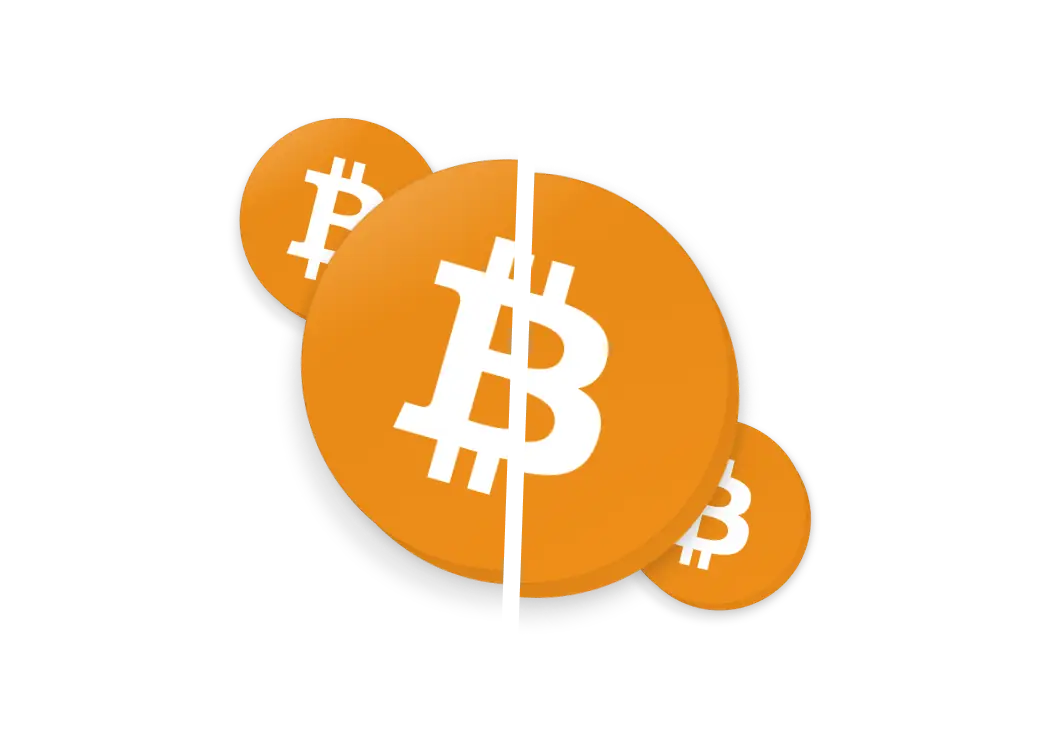
Bitcoin halving is a programmed event that reduces the reward miners receive for adding new blocks of Bitcoin transactions to the blockchain by 50%. It happens automatically in the protocol after every 210,000 blocks, slowing the rate at which new Bitcoin (BTC) enters circulation and enforcing the 21 million coin supply cap.
Why is Bitcoin Halving important?
Bitcoin halving directly controls inflation in the Bitcoin system by steadily reducing new supply over time. This programmed scarcity differentiates BTC from traditional currencies and is key for long-term holders who see Bitcoin as a potential store of value.
What does this mean for the price of Bitcoin?
Historically, halvings have been followed by periods where the Bitcoin price eventually moved higher, although not in a straight line and never guaranteed. The next Bitcoin halving reduces selling pressure from miners and can increase focus on Bitcoin’s limited supply, but many other factors also influence price, so you should treat past patterns as context rather than a promise of future performance.
How does Bitcoin Halving work?
Bitcoin uses proof of work, where miners use computing power to secure the network by processing Bitcoin transactions and adding blocks to the chain. Roughly every 210,000 blocks, the protocol automatically halves the block reward given to successful miners, cutting new issuance while leaving the 10-minute target block time and the rules for Bitcoin mining and difficulty adjustment unchanged.
Bitcoin Halving price action

The first halving
28/11/2012
Bitcoin's price opened at US$12
30/11/2013
Bitcoin's price reached its cycle high of US$1,163
A 9,583.60% price appreciation over 367 days
Miner rewards reduced from 50 to 25 Bitcoins
Block height: 210,000
The second halving
09/06/2016
Bitcoin's price opened at US$663
17/12/2017
Bitcoin's price reached its cycle high of US$19,666
A 3,041.53% price appreciation over 562 days
Miner rewards reduced from 25 to 12.5 Bitcoins
Block height: 420,000
The third halving
11/05/2020
Bitcoin's price opened at US$8,741
14/03/2024
Bitcoin's price reached its current cycle high of US$73,794
A 802.02% price appreciation over 1,403 days
Miner rewards reduced from 12.5 to 6.25 Bitcoins
Block height: 630,000
The fourth halving
20/04/2024
Bitcoin's price opened at US$63,847
??/??/????
Bitcoin's price reached its cycle high of TBD
A ??% price appreciation over ??? days
Miner rewards reduced from 6.25 to 3.12 Bitcoins
Block height: 840,000
The fifth halving
03/2028
Bitcoin's price TBD
??/??/????
Bitcoin's price reached its cycle high of TBD
A ??% price appreciation over ??? days
Miner rewards reduced from 3.12 to 1.56 Bitcoins
Block height: 1,050,000
Summary
The halving event shapes Bitcoin's economic model and market behaviour, with patterns from previous instances showing a link between reduced block rewards and price surges. Following a halving, Bitcoin often experiences significant growth, reaching new highs due to institutional interest, adoption, and its store of value narrative.
Bitcoin Halving FAQs
What is the Bitcoin Halving?
The Bitcoin Halving is a programmed event that occurs approximately every four years, reducing the reward that miners receive for validating transactions and securing the network.
What does this mean for me?
The Bitcoin Halving affects the supply of new Bitcoins, potentially leading to increased demand and upward pressure on prices. It may also impact mining profitability and the broader cryptocurrency market.
Do I have to do anything?
As a Bitcoin holder or investor, you don't need to take any direct action during the halving. However, it's essential to stay informed about market developments and potential impacts on Bitcoin's price and ecosystem.
Were there previous Bitcoin Halvings?
Bitcoin has experienced four previous halvings: 2012, 2016, 2020, and 2024, each leading to significant price rallies and market dynamics. Understanding past halving events can provide insights into potential future trends.
How many Bitcoin Halvings will occur in the future?
Bitcoin's protocol dictates that halvings will continue approximately every four years until the maximum supply of 21 million Bitcoins is reached. The final halving is expected to occur in 2140. Future halvings will continue to impact Bitcoin's supply dynamics and market behaviour.
Why do halving occur less than every four years?
Halvings are set to occur every 210,000 blocks, and because blocks are targeted at about ten minutes but can vary slightly, the calendar timing is “approximately” four years, not exact. If blocks are mined slightly faster in a given cycle, the next Bitcoin halving date arrives a little earlier on the calendar, which is why you sometimes see estimates such as March or April rather than a fixed day.
Does Bitcoin Halving affect Altcoins?
Bitcoin halving can indirectly influence Altcoins because it often affects overall market sentiment and liquidity across the crypto ecosystem. When traders focus on the next Bitcoin halving, some capital may rotate into or out of other assets, and changes in BTC dominance or volatility can flow through to Altcoin prices, even though their protocols do not halve in the same way.
Find out the latest Bitcoin news

Bitcoin stays rangebound as bond yields take centre stage
Bitcoin pushes past US$84,000 while altcoins race ahead
Create an account and start trading with us today!
Get started