![[object Object]](https://cdn.sanity.io/images/yz4v1m0i/production/3c2ceffdd9e5617da853f9e0c40c29afcd4cac70-2000x2000.png?w=48&h=48&fm=webp&fit=min)

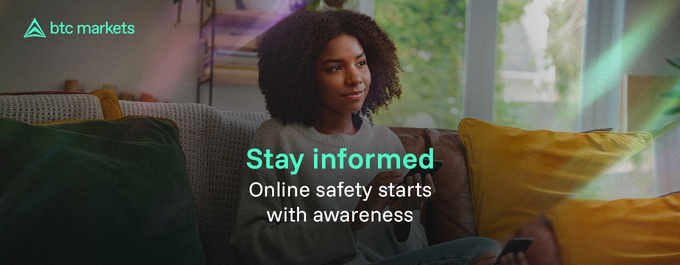
How much could someone find out about you with a quick search online?
Probably more than you think. Recent research commissioned by the Australian Department of Home Affairs found that 64% of Australians had personally identifying information publicly visible on social media. Birthdays, email addresses, phone numbers, and even residential suburbs were among the details people had shared.
On their own, these details may not seem particularly sensitive. But pieced together, they can give scammers information they can use to impersonate you or target your online accounts.
That makes protecting the way you log in just as important as being careful about what you share.
Your password is only one layer
A strong password is an important first step, but using the same password across several accounts can create problems. If those details are exposed elsewhere, scammers may try them on your email, financial accounts and other services.
Scamwatch recommends choosing passwords or passphrases that are difficult to guess and using multi-factor authentication where available.
Two-factor authentication (2FA) adds another check when you log in. This means knowing your password alone may not be enough for someone to access your account.
Your email account deserves the same attention. It is often connected to password resets and other important account notifications, so keeping it secure can help protect the accounts linked to it as well.
Think about where you're logging in
Account security also extends to the device and network you're using. Public computers and Wi-Fi hotspots can carry additional risks when accessing accounts or entering personal information.
Scamwatch recommends keeping devices and networks secure and avoiding public computers or Wi-Fi hotspots when providing personal details. The same care is useful when changing phones or using a new device. Make sure the device is secure and up to date and avoid saving login details on devices you don't control.
Keeping your account secure
Good account security comes down to a few habits you can use consistently:
- Use a strong, unique password for your BTC Markets account and avoid reusing it elsewhere.
- Enable 2FA to add another layer of protection when you log in.
- Keep the email account linked to your BTC Markets account secure.
- Avoid accessing sensitive accounts on public or shared devices and unsecured networks.
- Keep your devices and security software up to date.
- Be mindful of the personal information you make publicly available online.
These steps won't stop every scam attempt, but they can make it harder for someone else to gain access to your accounts. Scamwatch notes that account takeovers can involve weaknesses such as reused or easily guessed passwords and unsecured Wi-Fi or Bluetooth connections.
If something looks different
Unexpected account activity deserves attention. This could be difficulty logging in, changes you don't remember making or activity you don't recognise. Scamwatch lists unusual account activity and suddenly losing access to online accounts among the warning signs of a possible account takeover.
If you notice something unusual with your BTC Markets account, contact our Support team through our official channels as soon as possible. It's also worth changing the passwords on any other accounts where you've used the same or similar login details.
Learn more about how to protect yourself at https://www.scamwatch.gov.au/
Disclaimer: The information provided on this page is issued by BTC Markets Pty Ltd (BTC Markets, we, us, our). The information is general only and is not intended to constitute an opinion or recommendation with respect to its contents. Past performance is not a reliable indicator of future performance. Any reference to past performance is intended to be for general illustrative purposes only. The information cannot be relied upon for any purpose and is not intended to be a substitute for professional advice.
The information does not purport to be complete, accurate, or contain all the information that a person may require to make a decision. It may also contain forward-looking statements, which are subject to known and unknown risks, uncertainties, and other factors. We recommend you obtain professional advice before making any decision with respect to the matters discussed in this document. To the maximum extent permitted by law, BTC Markets will have no liability for any loss or liability of any kind: (i) arising in respect of the information contained (or not contained) on this page; or (ii) arising from a person relying on any information or statement contained on this page. The information provided is only intended for recipients in Australia. This information cannot be reproduced without our prior written permission.
Get BTC Markets content delivered
Keep up to date with the latest from BTC Markets. Unsubscribe anytime.SubscribeFind out the latest crypto news

What institutional partners should take from Australia's tokenisation timeline