![[object Object]](https://cdn.sanity.io/images/yz4v1m0i/production/3c2ceffdd9e5617da853f9e0c40c29afcd4cac70-2000x2000.png?w=48&h=48&fm=webp&fit=min)
Imagine owning a slice of a luxury beachfront property in Byron Bay, a share in of a Sidney Nolan artwork, or a stake in a barrel of Tasmania’s finest whisky, all without ever leaving your desk. Welcome to the world of tokenisation.
Tokenisation is reshaping how we think about ownership and access in the digital age. By turning real-world assets into blockchain-based tokens, it’s breaking down the traditional investment barriers and democratising a new era of fractional, transparent, and efficient finance.
In this guide, we’ll explore questions like “what is tokenisation?” and “what does tokenising mean?”. We’ll discuss how it works, the real-world opportunities it’s creating, and how BTC Markets can help you start your journey into this exciting new frontier of digital investing.
Understanding tokenisation
Tokenisation is the process of converting the real-world rights that are associated with a real-world asset, such as real estate, into digital tokens that are recorded on a blockchain. These tokens represent ownership or a stake in the asset.
By tokenising assets, assets can be divided into smaller, tradeable units, making it easier for groups of smaller investors to access opportunities that are usually limited to the wealthy. For example, a high-value piece of beachfront property in Victoria’s Brighton Beach could be tokenised so multiple investors could each own a fraction of it.
At BTC Markets, we want to support your exploration of tokenised assets by giving users the tools to participate in the future of digital finance, such as our Learning Hub and Blog.
How does tokenisation work?
So, how does tokenisation work? Well, tokenisation relies on blockchain technology to create the digital representations of real-world assets. Here's a simplified breakdown:
- Asset selection: A real-world asset is identified for tokenisation (almost any tangible asset in theory can be tokenised, including intangible assets such as music royalties).
- Smart contract creation: A smart contract is crafted to define the terms of ownership, trading, and rights associated with the underlying token.
- Token issuance: A limited number of digital tokens are minted on the blockchain, typically the Ethereum chain, representing a fractional part of the asset.
- Trading: These tokens can then be bought, sold, or traded on specialist platforms and exchanges.
The smart contracts used to support the creation of tokens are automated, secure, and transparent, providing trusted foundations for digital asset ownership.
Benefits of tokenisation
Tokenisation has a number of advantages:
- Enhanced liquidity: Assets like real estate or fine artworks typically take months to sell. They are in illiquid markets, where there are limited buyers and sellers. Tokenisation makes fractional ownership easier and allows that ownership to be traded quickly and easily.
- Wider ownership: Investors can purchase smaller portions of high-value assets, opening markets to a much wider audience. So, for example, you could consider balancing your real estate portfolio with 2% ownership of a seafront house in Los Angeles, with 5% of a unit in Adelaide, and 10% of a holiday home in Noosa.
- Enhanced transparency: Blockchains record all transactions, and with public blockchains, such as Ethereum, offer greater visibility for anyone with an internet connection to view transaction histories.
- Efficiency and cost savings: Tokenisation has the potential to remove intermediaries, reducing transaction costs and settlement times.
In September 2024, BTC Markets listed ONDO, a US cryptocurrency that specialises in regulated, fractionalised Real World Assets that include investment products.
Real-world applications of tokenisation
Tokenisation is already beginning to be applied across a wide range of industries, from bricks-and-mortar real estate to digital rights and collectibles. This will democratise asset ownership and transform how Aussies invest, trade, and interact with assets.
Real estate
In Australia’s competitive property market, tokenisation offers a new pathway to entry. A high-value commercial property in the heart of Sydney or a luxury coastal home in Noosa can be split into thousands of digital tokens. This allows everyday investors to buy fractional ownership, e.g., $500 worth of a $5 million property. Investors could also receive a portion of rental income or capital appreciation, without needing to purchase the entire asset or take out a mortgage.
Commodities
Australia is a resource-rich nation, and tokenising locally significant commodities is generating interest. Investors could own a digital share in a gold bullion bar from the Perth Mint, or a tokenised portion of lithium mined in Western Australia, a key component in EV batteries. Even agricultural produce, such as tokenised wheat, wine, or wool, could become part of diversified investment portfolios, making commodity markets more accessible to smaller investors.
Intellectual property
Australia’s creative sector, from musicians to filmmakers and authors, can use tokenisation to transform how they monetise their work. Imagine owning a piece of the royalties from AC/DC or supporting an independent film project by buying a token that grants you a share of future streaming revenues. This opens the door to direct artist-fan investment models and new funding mechanisms for culture going forward.
Art and collectibles
Australia has a thriving art scene and a passion for collectibles. These range from Indigenous art to vintage Holden memorabilia. Tokenisation of these collectibles enables investors to secure fractional ownership and to co-own pieces housed in national galleries or private collections. Likewise, rare surfboards and wine collections from the Barossa Valley can be traded as digital tokens on the blockchain.
BTC Markets provides a gateway to understanding tokenisation and its real-world applications, enabling users to explore and invest in emerging digital assets.
Challenges and risks of tokenisation
Tokenisation is still in the early stages of adoption but is beginning to generate increasing traction. While it is full of potential, tokenisation also faces some challenges:
- Regulatory uncertainty: The global regulatory landscape is evolving very slowly. In Australia, digital assets are under increasing review and scrutiny by regulators such as ASIC and AUSTRAC. While this signals growing legitimacy, it also means there is a lack of clarity as to how tokenised real-world assets should be treated. Questions remain around investor protection, tax implications, licensing requirements, and how ownership of tokenised assets would be recognised in courts.
- Technology barriers: Behind every tokenised asset is a smart contract supported by blockchain infrastructure. Both must be secure, stable, and scalable. Bugs in smart contracts and poorly designed platforms can lead to lost assets or failed transactions. For tokenisation to go mainstream, user interfaces need to improve. It needs to be just as easy for someone to buy a tokenised asset as it is to buy shares through a mobile banking app.
- Market acceptance: Tokenisation is still evolving as a concept for many investors. While crypto-native investors may feel comfortable exploring fractionalised assets, traditional finance institutions remain cautious, with many still viewing tokenisation as speculative or unproven. Over time, education, transparency, and continued success stories will play a key role in shifting this mindset.
BTC Markets is committed to playing our part in that process, providing educational resources through our Learning Hub and Blog to help all users understand the evolving landscape of tokenised assets.
How to get started with tokenisation
To understand tokenisation and its underlying complexities takes time, so here are some simple steps to follow:
- Learn the basics: Get to grips with tokenisation and how it works.
- Choose a trusted platform: Sign up with a reputable exchange like BTC Markets.
- Select your assets: Carefully identify tokenised assets that resonate with you.
- Start investing: Start in a small way to buy, hold, or trade digital assets.
BTC Markets provides a secure and reliable environment for Australian investors to participate in the growing digital asset economy.
Explore tokenisation with BTC Markets
Tokenisation is reshaping how we invest, own, and trade assets, making markets more accessible, transparent, and efficient. You may be new to crypto or a seasoned investor exploring new opportunities; either way, BTC Markets is here to support your journey.
Start exploring tokenised digital assets today with BTC Markets, Australia's trusted crypto exchange.
Get BTC Markets content delivered
Keep up to date with the latest from BTC Markets. Unsubscribe anytime.SubscribeFind out the latest crypto news
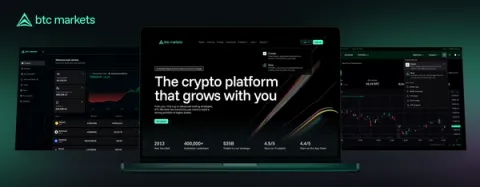
BTC Markets’ new platform is live and out of beta