![[object Object]](https://cdn.sanity.io/images/yz4v1m0i/production/38f2c02224d5ea8d551881949e819f95a9952e46-3972x5243.jpg?rect=0,0,3972,3972&w=48&h=48&fm=webp&fit=min)


Sign up to our weekly newsletter
Stay informed on the latest market updates – subscribe to our weekly newsletter today.
Thank you from all of us at BTC Markets.
We’ll be pausing our weekly updates until mid-January as we take a short break to recharge and prepare for an exciting 2026.
From all of us at BTC Markets, we wish you a Merry Christmas and a Happy New Year. In a market full of choices, thank you for trusting a home-grown Australian exchange to support your crypto journey.
See you in the new year!
The BTC Markets Team
Introduction
Crypto markets are navigating a pivotal week as macro policy, institutional flows, and regulatory shifts converge. The Federal Reserve’s latest rate cut has traders weighing hawkish signals against Bitcoin’s historical post-FOMC weakness. ETF inflows surged ahead of the decision, hinting at tactical positioning rather than renewed conviction. Meanwhile, banks and asset managers are reshaping demand dynamics, Ethereum is outperforming on whale accumulation, and new products are expanding investor access. From the OCC’s green light for banks to act as crypto brokers to corporate treasury strategies under pressure, the integration of digital assets into global finance is accelerating.
At the same time, global macro signals remain mixed. Strong US jobs data lifted the dollar and reinforced expectations for further policy easing, while Europe saw modest sentiment gains despite Germany’s drag. China posted stronger exports but weaker imports, Japan faced bond-market volatility, and Australia held rates amid inflation risks. Diverging conditions keep markets focused on labour trends, inflation signals, and central-bank communication as year-end approaches.
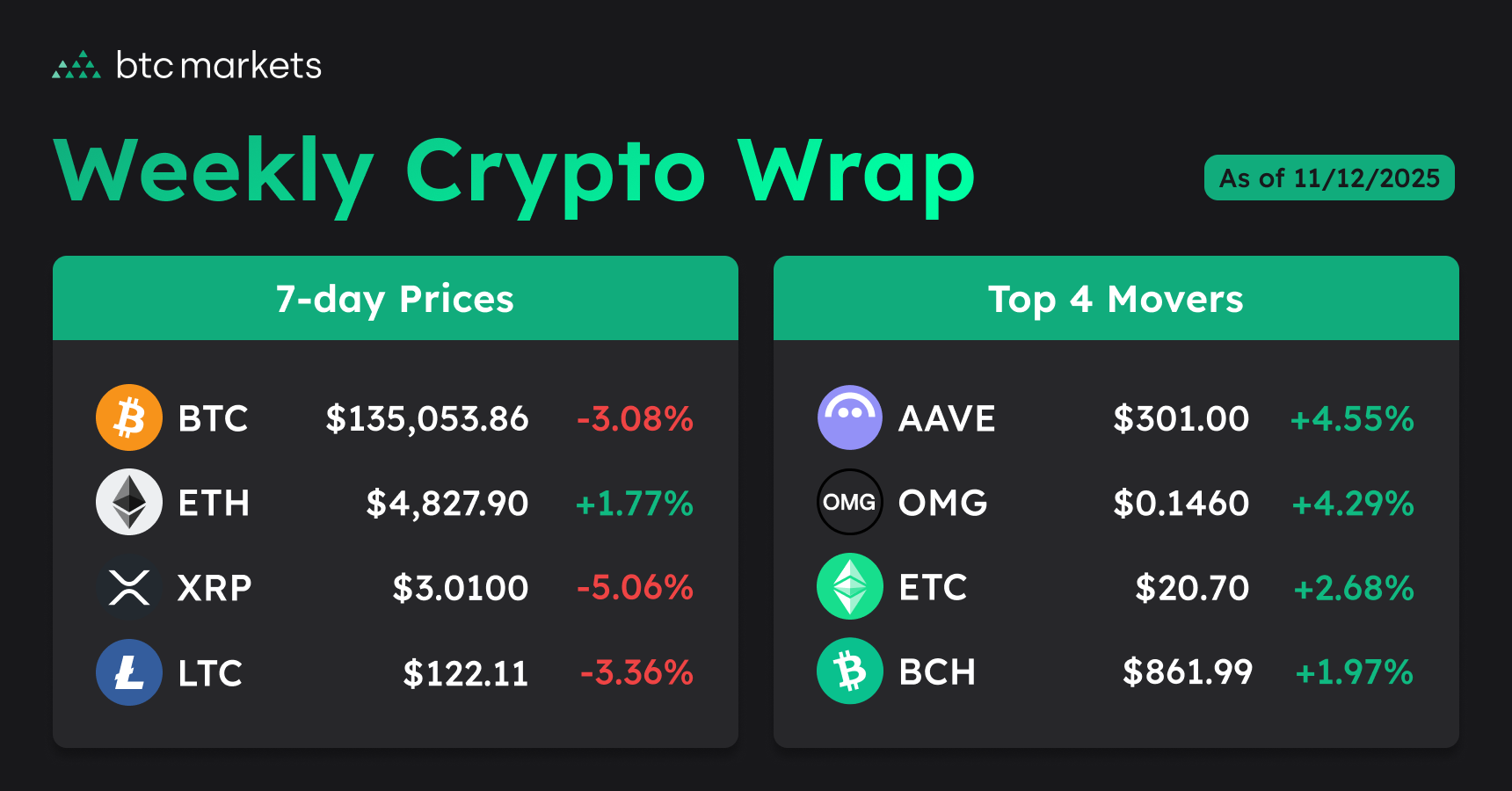
Check prices on the BTC Markets exchange.
State of crypto
- US Fed cuts rates, Bitcoin volatility looms amid hawkish policy signals
- Bitcoin ETF inflows rebound sharply ahead of key FOMC decision
- Banks and institutions reshape crypto demand through ETFs and treasury shifts
- Ethereum rallies as whales accumulate and staking demand strengthens outlook
- Corporate strategies evolve with new crypto products and treasury expansions
- OCC authorises banks to enter crypto brokerage
US Fed cuts rates, Bitcoin volatility looms amid hawkish policy signals
The US Federal Reserve lowered its benchmark rate by 0.25% to 3.50%-3.75%, marking the third consecutive cut this year. Markets had priced in the move, but Chair Powell’s tone and 2026 guidance remain key. Bitcoin briefly spiked to US$94,476 before settling near US$92,500. Historically, BTC has declined after six of the last seven FOMC meetings, averaging -0.70% within 48 hours. Analysts warn a hawkish stance could cap upside, while dovish signals may support a push toward US$100K.
Bitcoin ETF inflows rebound sharply ahead of key FOMC decision
Bitcoin Spot ETF flows in 2025 have been anything but steady. July led the year with US$6.02B in inflows, but November reversed sharply with US$3.48B in outflows. December shows a modest US$3.49M inflow so far. Despite these swings, total net assets remain robust at US$122.10B. The key question: will ETF demand stabilise as macro conditions evolve?
Check BTC
Banks and institutions reshape crypto demand through ETFs and treasury shifts
Standard Chartered has reduced their Bitcoin targets by 50%, citing a shift from corporate treasury buying to ETF-driven demand. Meanwhile, Strategy (formerly MicroStrategy) now holds 660,624 BTC worth US$60.29B and opposes MSCI’s proposal to exclude digital asset treasury firms from indexes, warning of US$2.8B, US$8.8B in potential passive outflows. Meanwhile, PNC Bank became the first major US bank to offer direct Bitcoin trading to private clients, signalling deeper integration of crypto into traditional finance.
Ethereum rallies as whales accumulate and staking demand strengthens outlook
ETH rallied 9% to US$3,447, breaking above its 50-week moving average, a level historically preceding major rallies. Whales accumulated 934K ETH worth US$3.15B, while retail sold. ETF inflows and staking demand support near-term targets of US$3,500, US$4,000, with long-term projections as high as US$12,000 by 2026.
Check ETH
Corporate strategies evolve with new crypto products and treasury expansions
Twenty-One Capital debuted on NYSE with US$4B in BTC holdings but plunged 20% on day one amid unclear revenue plans. Strive launched a US$500M stock offering to expand its Bitcoin treasury strategy despite unrealised losses. Bitwise introduced a US$1.25B multi-crypto index ETF, offering diversified exposure to top assets including Bitcoin, Ethereum, and XRP.
Check XRP
OCC authorises banks to enter crypto brokerage
The Office of the Comptroller of the Currency (OCC) now allows US banks to act as crypto brokers in “riskless principal” trades, executing client orders without holding inventory. This expands services beyond custody and investment, removes reliance on intermediaries, and positions banks to compete with exchanges. Combined with recent guidance, it signals deeper crypto integration into traditional finance.
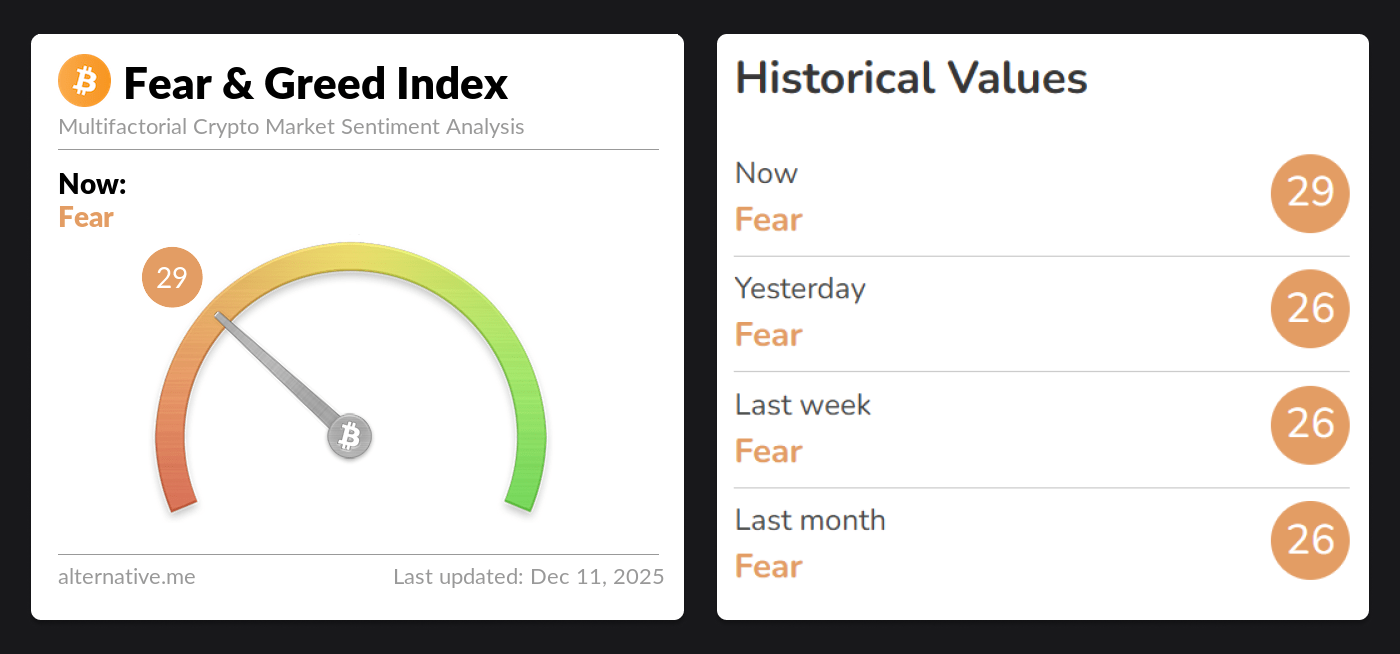
Crypto Fear & Greed Index
2025 Year-end review
From all-time highs to hard resets and real progress
- A year that tested conviction for crypto investors and institutions globally
- Bitcoin’s wild ride reflects volatility and shifting macroeconomic market conditions
- Utility takes centre stage as real-world blockchain applications gain traction
- Institutional adoption accelerates with ETFs, banks, and asset managers entering crypto
- Regulation clears the path for mainstream integration and investor confidence growth
- DeFi and decentralisation gain ground as users seek autonomy and innovation
A year that tested conviction for crypto investors and institutions globally
2025 was a year of extremes for crypto. We started strong, rode a bullish wave through Q3, and then hit turbulence in Q4 as macro-optimism faded, and AI overvaluation fears rattled risk assets. Bitcoin’s journey told the story: from an October all-time high near US$126,000 to a mid-November low of US$80,600, before stabilising around US$92,500-US$93,000 in December (at time of writing). That correction marked Bitcoin’s second-worst quarterly return since 2022.
The trigger? Overleveraged positions across Bitcoin and DeFi unwound in spectacular fashion, forcing liquidations and a painful reset. But beneath the volatility, something important happened: the market matured. Capital and developer attention shifted decisively toward utility-driven sectors, tokenised assets, stablecoins, and on-chain yield instruments, signalling that the next phase of growth is being built on fundamentals, not speculation.
Bitcoin’s wild ride reflects volatility and shifting macroeconomic market conditions
Bitcoin’s October peak was fuelled by ETF euphoria and risk-on sentiment. Spot Bitcoin ETFs now hold about 1.1 billion BTC, about 6.57% of circulating supply, with total AUM at US$122.10 billion. But as macro headwinds returned and leverage unwound, prices corrected sharply. By year-end, Bitcoin was consolidating near US$93,000, with traders watching whether US$86,000 remains a key support zone.
Utility takes centre stage as real-world blockchain applications gain traction
Q4 reinforced a structural pivot: tokenisation and stablecoins became core allocations for institutions. The launch of SPXA, the first licensed tokenised S&P 500 index fund, drew over US$500 million even during Bitcoin’s crash. Tokenised Treasuries, bonds, and real estate gained traction as banks explored blockchain-based collateral networks. These developments anchor crypto to the real economy, creating durable foundations for growth.
Institutional adoption accelerates with ETFs, banks, and asset managers entering crypto
JPMorgan launched a USD deposit token on Base, enabling near-instant 24/7 settlement for clients like Mastercard. Ant International partnered with UBS on tokenised cross-border payments. These pilots show that tokenisation is no longer a science project, it’s becoming a core infrastructure play for global finance.
Regulation clears the path for mainstream integration and investor confidence growth
Despite a US government shutdown delaying a market structure bill, joint SEC-CFTC guidance clarified token classifications: most network tokens as commodities under CFTC oversight, tokenised securities under SEC rules. The SEC also approved generic listing standards for commodity-based ETFs, cutting approval timelines to about 75 days. This clarity unlocked progress in TradFi integration and pushed stablecoin market cap to an all-time high above US$290 billion.
DeFi and decentralisation gain ground as users seek autonomy and innovation
Decentralised perpetuals captured 16% of global perpetual trading volume by year-end, with Hyperliquid emerging as a top fee generator. Privacy coins like Zcash briefly outperformed on technical upgrades, while infrastructure expanded with cross-chain liquidity routers and better oracle data.
Final thoughts for 2025
2025 was a stress test that cleared excess leverage and confirmed crypto’s evolution from speculative hype to real-world utility. Institutional adoption, tokenisation, and regulatory clarity are setting the stage for accelerated growth in 2026. The next chapter will be defined by integration, not isolation, as crypto becomes a core layer of global finance.
Announcements

Introducing AI News & Insights
We’ve launched AI News & Insights, a new tool designed to bring you fast, reliable updates on the latest market trends and events.
Our AI engine scans trusted sources, summarises key developments, and delivers clear insights, all in one place.
You can access AI News & Insights from the Explore section on the Simple Trade platform.
The week ahead: Economic events
Thursday, December 11th
- United States Fed Funds Interest Rate,
Friday, December 12th
- United Kingdom Monthly GDP MoM
Monday, December 15th
- Japan Business Confidence
- China Industrial Production, Retail Sales YoY
- Canada Inflation Rate
Tuesday, December 16th
- Australia Consumer Confidence MoM
- United Kingdom Unemployment Rate, Manufacturing PMI,Services PMI
- Germany Manufacturing PMI, ZEW Economic Sentiment Index
- United States Building Permits, Housing Starts, Non Farm Payrolls, Retail Sales, Unemployment Rate
Wednesday, December 17th
- Japan Balance of Trade
- United Kingdom Inflation Rate
- Germany Ifo Business Climate Index
Source: Trading Economics
Market reflections
- United States: Dollar strengthened after firm jobs data supported expectations of a Fed cut with hawkish guidance likely
- Europe: Investor sentiment improved, though Germany remained a drag on the region’s outlook
- China: Exports exceeded forecasts while imports underperformed, widening the trade surplus
- Japan: BoJ flagged concern over rapid increases in long-term rates, signalling readiness to adjust bond purchases
- Australia: RBA left rates unchanged and warned that inflation risks remain elevated
Macroeconomic signals this week highlighted uneven momentum across major economies. In the United States, the dollar strengthened after stronger-than-expected labour data reinforced expectations of a Federal Reserve rate cut, even as policymakers were expected to lean hawkish in their guidance. The firmer jobs figures added support to the case for policy easing while keeping inflation risks in focus.
Europe saw a modest lift in sentiment. Investor morale in the euro zone improved, although Germany continued to pull the region’s outlook lower. The divergence between core and periphery conditions kept expectations steady for policy stability heading into year-end.
China delivered mixed trade signals. November exports surpassed expectations, but import growth weakened, pointing to soft domestic demand. The imbalance expanded China’s trade surplus and underscored the ongoing challenge of stabilising internal consumption.
Japan faced renewed bond-market volatility after the Bank of Japan described the recent rise in long-term yields as “somewhat rapid.” Officials signalled readiness to increase government bond purchases if needed, a stance that markets interpreted as a cautious step toward smoothing rate adjustments.
In Australia, the Reserve Bank kept its policy rate unchanged and warned that inflation risks remain elevated. The bank reiterated that further easing is unlikely in the near term as policymakers continue to watch price dynamics closely.
Across regions, macro conditions continue to diverge, with some economies showing resilience and others struggling with weak demand or tightening financial conditions. Markets are likely to take their cues from labour trends, inflation signals, and central-bank communication over the coming weeks.
2026 The year ahead
Top 5 crypto catalysts to watch in 2026
As we wrap up a volatile 2025, 2026 looks primed for acceleration, driven by regulatory unlocks, liquidity floods, and tech maturation. Drawing from analyst forecasts, on-chain trends, and market chatter, here are the top 5 catalysts that could supercharge the space. These aren't guarantees (DYOR, NFA), but they're the ones with the strongest momentum heading into the new year.
Regulatory clarity via the ‘Clarity Act and Market Structure Bill’
Expect full implementation of the Clarity Act by Q1, classifying most tokens as commodities and slashing SEC hurdles for listings. Paired with the Market Structure Bill curbing manipulation, this could unlock $9T in U.S. retirement funds for crypto exposure and boost institutional confidence. Analysts see it pushing total market cap past US$20T as TradFi piles in.
Fed overhaul: Rate cuts, new pro-crypto Chair, and QE revival
With the December 2025 rate cut confirmed and QT ending, 2026 is set to bring at least three additional cuts, potential adjustments to the enhanced Supplementary Leverage Ratio (eSLR), and a dovish Fed chair such as Kevin Hassett. Global QE from China, Japan, and Canada adds liquidity, echoing 2020’s pre-parabolic setup. Analysts suggest this wave could extend the cycle, with Bitcoin potentially lifting toward US$200K, driven by sustained ETF inflows.
Institutional inflows and RWA tokenization explosion
Spot ETFs for ETH, SOL, and alts (following SEC's 75-day approvals) could draw US$10B+ quarterly, while RWAs like tokenized S&P indices and bonds hit US$500B+ TVL. BlackRock and Vanguard's crypto ETF expansions, plus pilots from JPMorgan and UBS, make this the "cleanest" entry for conservative capital, outpacing BTC's returns as a hedge.
Ethereum upgrades: Fusaka and beyond for scalability
The Fusaka upgrade (Dec 2025 rollout) slashes L2 fees via PeerDAS and blobs, followed by Glamsterdam's 2-5x gas limit hike in H1 2026. This reignites DeFi TVL (already +15% MoM in late 2025), boosts staking yields to 3-4%, and draws devs back, positioning ETH as the settlement layer for AI agents and tokenised assets.
AI/DePIN and prediction markets convergence
Decentralized compute (e.g., GPU tokenization) and DePIN networks explode with AI demand, while prediction platforms like Polymarket rival exchanges in volume. Native BTC lending (v4 protocols) and SocialFi 2.0 add yield and virality, creating tokenised economies for data, influence, and events. This narrative shift from hype to utility could 10x mid-caps like SOL and LINK.
Looking ahead
2026 feels like the "utility bull", less memes, more infrastructure. If macro aligns, we could see the cycle peak mid-year before a Q4 cooldown.

Online safety: Protect yourself from phishing and impersonation emails targeting BTC Markets clients
We’ve seen a rise in phishing and impersonation emails targeting our clients. These messages often look official, using familiar branding, urgent subject lines, and even transaction details. Some may ask you to share 2FA codes or confirm withdrawals.
Please remember: BTC Markets will never ask for your 2FA codes, passwords, seed phrases, request you to move funds off our platform, or instruct you to install remote access software.
To keep your account safe, always log in through our official app or website and double-check the sender’s email address before taking any action.
Learn more about how to stay safe
Report suspicious emails via our support portal
Stay up to date on the latest news in the crypto space.
Sign up for free and join over 374,000 Australian traders who receive the BTC Markets Weekly Crypto Wrap.
Subscribe to our status page for live system updates or follow us on X.
Feedback
If you have any feedback on our newsletter or want to request specific content, please submit a support ticket and we will respond shortly.
Disclaimer: The information provided on this page is issued by BTC Markets Pty Ltd (BTC Markets, we, us, our). The information is general only and is not intended to constitute an opinion or recommendation with respect to its contents. Past performance is not a reliable indicator of future performance. Any reference to past performance is intended to be for general illustrative purposes only. The information cannot be relied upon for any purposes and is not intended to be a substitute for professional advice.
The information does not purport to be complete, accurate or contain all of the information that a person may require to make a decision. It may also contain forward looking statements, which are subject to known and unknown risks, uncertainties, and other factors. We recommend you obtain professional advice before making any decision with respect to the matters discussed in this document. To the maximum extent permitted by law, BTC Markets will have no liability for any loss or liability of any kind: (i) arising in respect of the information contained (or not contained) on this page; or (ii) arising from a person relying on any information or statement contained on this page. The information provided is only intended for recipients in Australia. This information cannot be reproduced without our prior written permission.
Get BTC Markets content delivered
Keep up to date with the latest from BTC Markets. Unsubscribe anytime.SubscribeFind out the latest crypto news