![[object Object]](https://cdn.sanity.io/images/yz4v1m0i/production/3c2ceffdd9e5617da853f9e0c40c29afcd4cac70-2000x2000.png?w=48&h=48&fm=webp&fit=min)


XRP is a digital currency used for fast, low-cost payments across borders. Created by Ripple Labs, it's not designed to be held like digital gold. Instead, it plays a functional role as a bridge between different currencies, primarily within the global banking system. In this guide, we explore what XRP is, how it works, and why it matters.
What is XRP?
XRP is the native digital asset of the XRP Ledger (XRPL), a decentralised, open source blockchain developed by Ripple Labs. Unlike many cryptocurrencies that are viewed primarily as a store of value or as a speculative asset, XRP was built to address real-world utility. Its core objective was to improve how money moves across international borders.
It serves as a bridge between fiat currencies, making transfers faster and more affordable than conventional banking systems. That makes it especially useful for financial institutions and international payment providers who need to send money quickly and securely.
Rather than being used as a long-term store of value, XRP often acts as a transfer mechanism for value in near real-time.
How does XRP and the XRP Ledger work?
The XRP Ledger
The XRP Ledger (XRPL) is a distributed, open-source network maintained by a global set of independent validators rather than miners. Instead of Proof-of-Work, it uses a consensus protocol where trusted nodes agree on which transactions are valid every few seconds, allowing the ledger to confirm transactions rapidly.Because the XRP Ledger does not rely on energy-intensive mining, it supports high throughput and low-cost transfers, making it attractive for payment-heavy XRP use cases like remittances and institutional settlement.
XRP- the native token
XRP is the native token of the XRP Ledger, with a total supply of 100 billion created at launch and distributed between the founders, early stakeholders, and Ripple. A small amount of XRP is destroyed with each transaction as a fee, which helps prevent spam and keeps the network efficient.
XRP can be used directly as a payment asset or as a bridge currency between two different fiat currencies, enabling instant settlement without pre-funded accounts. When you track the XRP price, you are seeing the market’s view on the value of this utility and its broader adoption potential.
What is XRP used for?
XRP supports several key use cases in finance and digital payments:
Cross-border payments
Financial institutions use XRP to reduce the time and cost of sending funds across borders. It acts as a bridge between currencies, simplifying international transfers.
Liquidity provision
Instead of maintaining costly reserves in multiple currencies, banks and payment providers can source liquidity instantly using XRP.
Currency bridging for fiat transfers
XRP enables fast and cost-effective conversions, for example, settling AUD to JPY payments without requiring pre-funded accounts.
Retail and institutional adoption
Although primarily aimed at enterprise use, XRP is also accepted by some retailers and payment platforms. It’s occasionally used by individuals for international money transfers or day-to-day payments.
Comparing XRP and Bitcoin: Key differences
Consensus mechanisms
Bitcoin uses Proof-of-Work mining, where miners compete using computing power to secure the network and validate transactions. XRP, by contrast, relies on a consensus algorithm where a set of validators agree on the state of the ledger without mining.
This structural difference affects energy use, transaction speed, and how upgrades are rolled out, making XRP and Bitcoin suited to different roles in the crypto ecosystem.
Cheaper, faster, and energy efficient
The XRP Ledger can settle transactions in a few seconds with very low fees, often a fraction of a cent, regardless of the transfer amount. Bitcoin, while highly secure, typically has slower confirmation times and higher variable fees, especially during periods of network congestion.
Because validators on XRPL do not perform energy-intensive mining, the network’s carbon footprint is significantly lower, which appeals to users and institutions focused on sustainability.
Scalability of XRP
The XRP Ledger is designed to support high transaction throughput, handling thousands of transactions per second with consistency. This scalability makes it well-suited for payment-heavy workloads and enterprise environments where reliability and speed are critical.
For traders and everyday users, this means you can move XRP quickly without worrying as much about delays or fee spikes during busy periods.
Benefits & risks of XRP
Like all cryptocurrencies, XRP comes with both potential benefits and challenges.
Benefits
- Fast and low-cost transactions
- High throughput and scalability
- More energy-efficient than traditional blockchains
Risks
- Regulatory uncertainty: XRP has been the subject of extensive historic legal action in the U.S., including proceedings with the Securities and Exchange Commission (SEC). As of March 2025, the U.S. officially ended its legal action against Ripple Labs concerning XRP’s classification as a financial security. This has provided long-awaited legal clarity to the digital asset.
- Volatility: As with other digital assets, XRP’s price can fluctuate significantly.
- Centralisation debate: Ripple Labs’ large XRP holdings have sparked discussions within the crypto community questioning the network’s level of decentralisation and the extent of Ripple Labs influence over the network.
How to buy & trade XRP with BTC Markets
You can start trading XRP on BTC Markets by following these easy steps:
1. Create an account
Sign up and complete your identity verification at BTC Markets for secure, compliant access.
2. Deposit AUD
Fund your account using PayID or bank transfers.
3. Buy XRP
Use the trading platform to place an instant or limit order, both with competitive fees.
4. Store your XRP
Hold XRP in your BTC Markets wallet or transfer to an external digital wallet.
5. Monitor your holdings
Track your portfolio and view performance through your BTC Markets dashboard.
BTC Markets offers a secure, locally supported platform for Australians looking to access XRP.
FAQs on XRP
Is XRP a good investment?
Whether XRP is a good investment depends on your goals, risk tolerance, and view of the future of cross-border payments . If you believe that blockchain-based settlement and liquidity solutions will play a bigger role in global finance, XRP offers direct exposure to that theme.
You should always research what XRP crypto is, understand the technology and regulatory context, and consider seeking independent advice before committing significant capital.
Why does XRP have value?
XRP derives value from its role in powering fast, low-cost transactions on the XRP Ledger and supporting use cases like cross-border payments and liquidity provision . Demand comes from financial institutions using Ripple-powered solutions, exchanges, traders, and individuals who value its speed and efficiency.
The network's design, Ripple Labs' long-running history and partnerships, and expectations about future growth all feed into market perception and, ultimately, the XRP price you see on exchanges like BTC Markets.
Get BTC Markets content delivered
Keep up to date with the latest from BTC Markets. Unsubscribe anytime.SubscribeFind out the latest crypto news
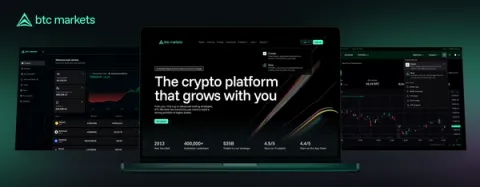
BTC Markets’ new platform is live and out of beta