![[object Object]](https://cdn.sanity.io/images/yz4v1m0i/production/38f2c02224d5ea8d551881949e819f95a9952e46-3972x5243.jpg?rect=0,0,3972,3972&w=48&h=48&fm=webp&fit=min)


Sign up to our weekly newsletter
Stay informed on the latest market updates – subscribe to our weekly newsletter today.
Announcements

AUDM is now live on BTC Markets!
Deposits and withdrawals are open. The order book is active for real time trading.
AUDM brings a stable, Australian dollar-pegged digital asset to the platform, giving traders a seamless way to move between fiat value and crypto markets with speed and efficiency.
Read the Product Disclosure Statement (PDS).
AUDM/AUD and AUDM/USDT trading pairs are available.
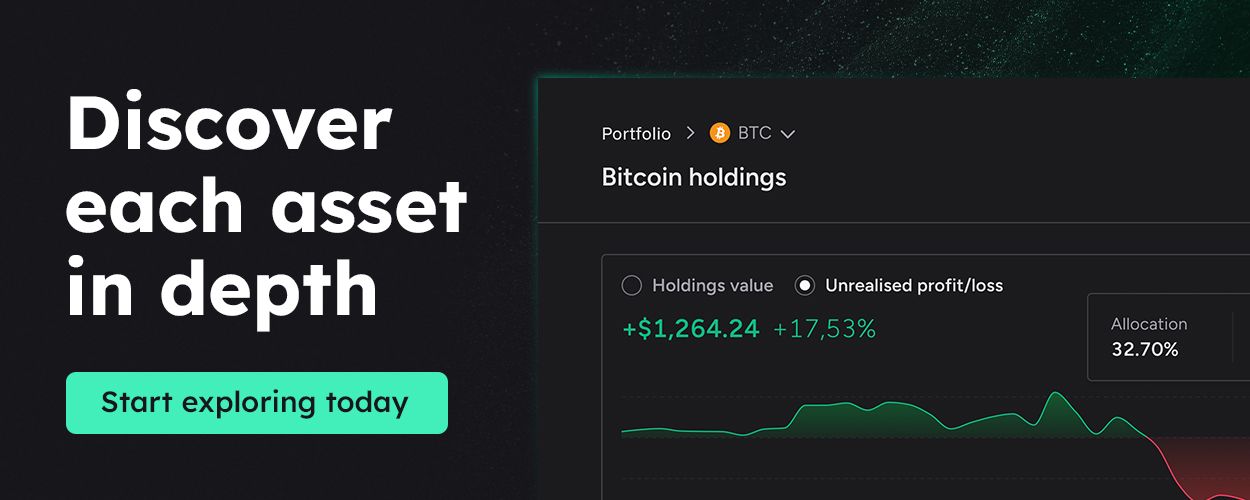
Holdings Pages now available
Holdings Pages are now live on BTC Markets. This update brings key asset-level information and portfolio context together in one place. It provides clearer visibility into your holdings and makes it easier to explore individual assets with relevant market data when trading.
Introduction
It was the kind of week that reminded crypto investors why this market never sleeps. Bitcoin hit a low of A$98,100 on Sunday before reaching a high of A$107,793 in Tuesday's trading session. The oil price spike driven by the Iran conflict triggered a seven-day consecutive streak of positive inflows into spot Bitcoin ETFs, signalling that institutional buyers treated the dip as an opportunity, not a warning. Regulatory frameworks shifted meaningfully in the background. And by Thursday, the Federal Reserve delivered a hawkish inflation update that trimmed those gains once more. This weekly wrap covers the events that defined the week of 12 to 19 March 2026, what they mean for markets, and what to watch next.
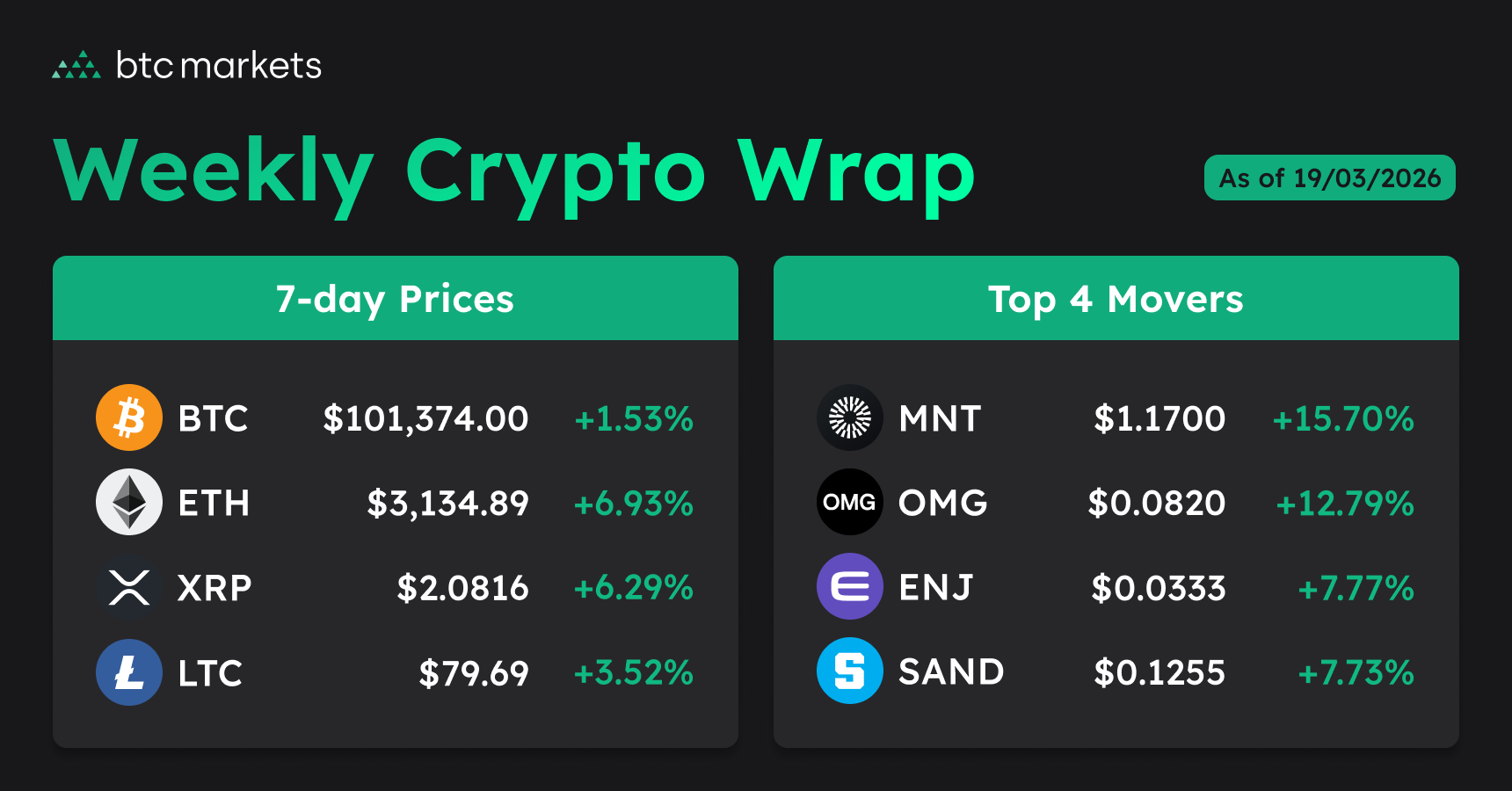
Check prices on the BTC Markets exchange.
State of crypto
- On the BTC Markets exchange, Bitcoin hit a weekly low of A$97,100 before recovering to A$107,793, a 10% swing across the week
- The US Federal Reserve held rates at 3.50% - 3.75% but lifted its 2026 inflation forecast to 2.7%
- US spot Bitcoin ETFs recorded seven consecutive days of net inflows totalling US$1.16 billion, led by BlackRock's IBIT
- The SEC and CFTC issued joint guidance classifying Bitcoin, Ethereum, and other major assets as digital commodities, ending years of regulatory uncertainty
- The 20 millionth Bitcoin was mined, leaving only 1 million BTC still to be created over the next century
- Australia's Senate committee backed a crypto licensing framework, bringing local exchanges and custodians under existing financial services rules
Institutions keep buying through the volatility
US spot Bitcoin ETFs recorded seven consecutive days of net inflows, totalling US$1.16 billion. BlackRock's IBIT led with US$169 million alone, while Fidelity's FBTC added US$24.4 million. Total Bitcoin ETF assets under management reached US$96.7 billion. Ethereum ETFs were not far behind, extending their own inflow streak to six consecutive days with US$138 million in net flows.
The consistency of these flows through a week that included geopolitical volatility, an oil price surge, and a hawkish Fed decision is worth noting. Institutional allocators are not reacting to short-term noise. The data suggests a deliberate, structured accumulation strategy that treats volatility as an entry point rather than a reason to pause.
Check BTC
Stablecoins move from narrative to infrastructure
Away from the ETF space, stablecoins continued to assert themselves as one of 2026's defining narratives. The total stablecoin market cap surpassed US$316 billion, an all-time high. PayPal expanded its PYUSD stablecoin to 70 markets across Asia-Pacific, Europe, and Latin America, with PYUSD's market cap reaching US$4.1 billion after a 600% rise through 2025. Mastercard agreed to acquire London-based stablecoin infrastructure firm BVNK for up to US$1.8 billion, one of the largest crypto-native acquisitions of the year.
In Washington, Senate Banking Committee Chairman Tim Scott indicated that compromise language on the stablecoin yield dispute could emerge by week's end, with analysts noting the legislative window ahead of the 2026 midterms is narrowing. The CLARITY Act's passage odds were revised down from 80% to 62%, but the direction of travel remains toward formalised stablecoin regulation. For everyday investors, the stablecoin story is no longer a background theme. It is infrastructure being built in real time.
Check ETH
The US Fed holds, and BTC pulls back
The US Federal Reserve maintained its benchmark interest rate at 3.50% to 3.75%, in line with expectations. The surprise was not the decision itself but the revised inflation outlook. The Fed lifted its 2026 inflation projection from 2.4% to 2.7%, citing uncertainty from Middle East developments and elevated oil prices. Chair Powell noted that Brent crude exceeding US$104 per barrel was already affecting inflation forecasts, though he acknowledged the full impact remained unclear.
The updated dot plot indicated just one 25-basis-point rate cut expected in 2026 and one in 2027, reinforcing a higher-for-longer rate stance that has historically weighed on risk assets.
The takeaway for investors is that macro conditions remain a meaningful variable for crypto markets, even as the asset class shows signs of decoupling from equities during geopolitical stress. The Fed's updated stance does not change the underlying structural story, but it does suggest the path of least resistance for rates is staying higher for longer. With Brent crude still above US$100 and Middle East uncertainty unresolved, the inflation ceiling is being pushed up in ways that limit central bank flexibility. That is a headwind worth monitoring carefully heading into April.
Check UNI
US SEC and CFTC deliver landmark regulatory clarity
For years, the dominant question facing crypto exchanges, developers, and institutional investors in the United States was a simple one: is this a security or a commodity? On 17 March, that question received its most definitive answer to date. The SEC and CFTC issued joint guidance introducing a five-category token taxonomy, officially classifying Bitcoin, Ethereum, XRP, Solana, Cardano, Dogecoin, and other major cryptocurrencies as digital commodities rather than securities.
The 68-page guidance also confirmed that staking, airdrops, and mining are generally not considered securities transactions. This removes a significant layer of legal risk that has weighed on exchanges, developers, and institutional participants for the better part of a decade. The shift from what critics called regulation by enforcement to a clear written framework represents a meaningful structural change for the industry.
For Australian investors and the local exchange ecosystem, the US framework matters. Regulatory settings in the United States have historically influenced how global exchanges operate and how institutional capital flows. Clarity in the world's largest capital market tends to ease broader adoption timelines. Locally, Australia's Senate committee also backed a crypto licensing framework during the week, bringing local exchanges and custodians under existing financial services rules. Both developments point in the same direction: formal integration of digital assets into mainstream financial regulation. That is generally constructive for market confidence and for the longer-term credibility of the asset class.
Check SOL
The 20 millionth Bitcoin was mined
Somewhere between 11 and 15 March 2026, a milestone that Bitcoin supporters have been anticipating for years quietly arrived. The 20 millionth Bitcoin was mined. With only 21 million Bitcoin hardcoded into the protocol, that leaves just 1 million BTC still to be created, and those will take approximately another 100 years to enter circulation through the mining process.
This event carries weight beyond the symbolic. It sharpens Bitcoin's core scarcity narrative at a moment when institutional demand is accelerating. Roughly 95.24% of all Bitcoin that will ever exist is now in circulation. New supply entering the market is progressively shrinking. The halving mechanism, which cuts mining rewards in half approximately every four years, ensures this supply rate only decreases over time.
The milestone drew widespread mainstream and institutional media coverage through the week, reinforcing Bitcoin's positioning as a finite, programmatically scarce asset. In an environment where central banks are revising inflation forecasts higher and energy markets are under structural pressure, the argument for a fixed-supply asset becomes incrementally more compelling. For long-term holders in Australia and globally, this is not a new argument, but the 20 millionth Bitcoin being mined gives it renewed clarity. The question for investors is not whether Bitcoin is scarce. It is whether that scarcity is being appropriately priced in at current levels.
Crypto Fear & Greed Index
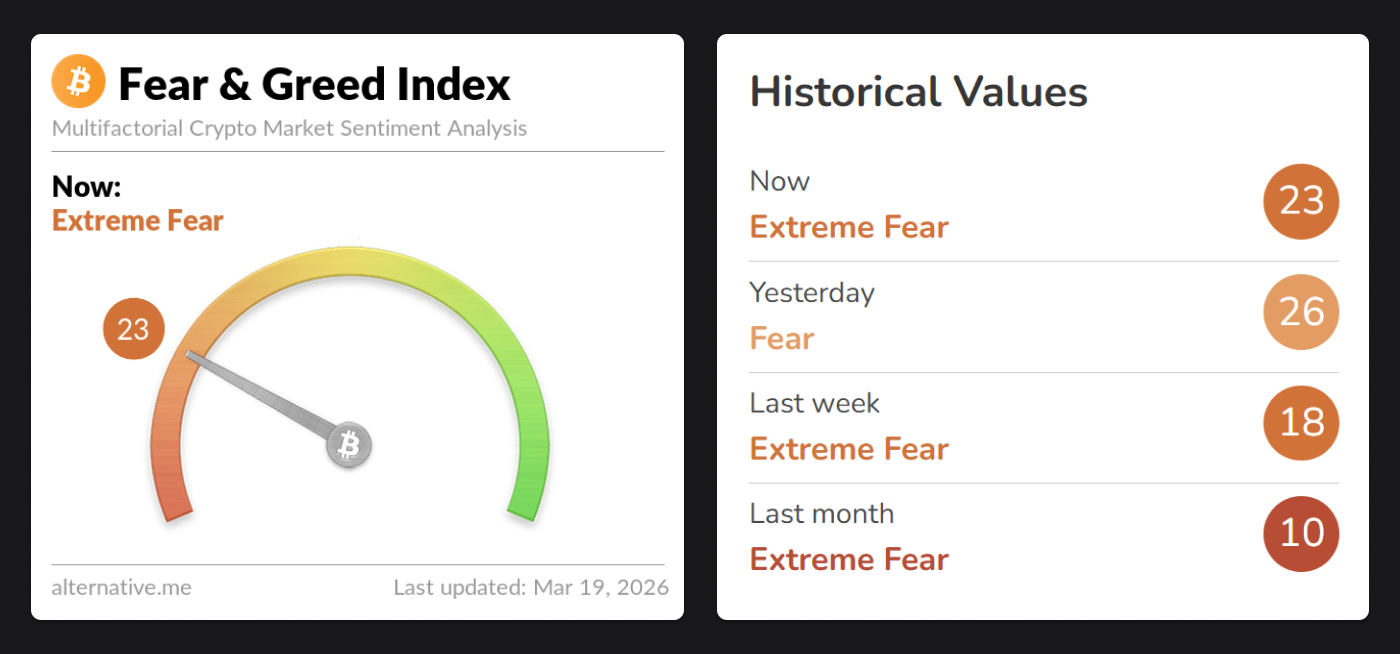
Source: Fear & Greed Index
BTC Markets in the news
Bloomberg: Bitcoin Surprises as Oasis of Calm While Iran War Jolts Markets
“Bitcoin’s resilience here is less about narrative and more about mechanics,” said Rachael Lucas, an analyst at BTC Markets. “Institutional buyers, particularly corporate treasuries, are absorbing supply on every dip.”
Cointelegraph: Bitcoin is back in ‘FOMO territory’ after crossing $70K: Santiment
Rachael Lucas, a crypto analyst at crypto exchange BTC Markets, told Cointelegraph that Bitcoin breaking back through $70,000 was also a catalyst, because it’s a “meaningful resistance point, and reclaiming it publicly, on social media feeds and price alerts, reignites the fear of missing a move.”
The week ahead: Economic events
Thursday, March 19th
- United States Fed Funds Interest Rate
- Japan Interest Rate
- United Kingdom Unemployment Rate, Interest Rate
- Euro Area Deposit Facility Rate, Interest Rate
Tuesday, March 24th
- Japan Inflation Rate
- Germany Manufacturing PMI
- United Kingdom Manufacturing PMI, Services PMI
Wednesday, March 25th
- United Kingdom Inflation Rate
- Germany Ifo Business Climate Index
Source: Trading Economics
Market reflections
- United States: Fed signals a cautious, wait-and-see approach as policymakers assess inflation risks tied to geopolitical tensions
- Europe: Largest economies support centralised market supervision to strengthen capital markets integration
- China: Economic activity shows a stronger start to 2026, though risks around demand and property remain
- Japan: Underlying inflation continues to accelerate toward the BOJ’s 2% target
- Australia: RBA raises rates in a closely split decision, reflecting persistent inflation concerns
This week’s macro backdrop was defined by diverging policy signals and uneven economic momentum across major economies, as central banks navigate inflation pressures alongside emerging growth risks.
In the United States, the Federal Reserve is maintaining a cautious stance as it evaluates the economic impact of higher oil prices and geopolitical uncertainty. Policymakers are weighing whether inflationary pressures will persist or if growth risks will begin to dominate.
Across Europe, Germany, France, Italy, Spain, the Netherlands, and Poland backed a move toward centralised capital markets supervision. The proposal signals a push to deepen financial integration and streamline oversight across the bloc, even as policymakers remain cautious amid ongoing uncertainty in the broader economic outlook.
In China, recent data pointed to a stronger-than-expected start to the year, with improvements across industrial output and consumption. However, policymakers remain alert to ongoing structural challenges, including weak domestic demand and property sector fragility.
Japan’s inflation continues to trend upward, moving closer to the Bank of Japan’s target. Despite this progress, policymakers remain cautious about tightening policy too quickly, given external pressures and the need to sustain economic stability.
Meanwhile, in Australia, the central bank raised interest rates following a narrowly split decision. The outcome highlights persistent inflation concerns and growing debate within the RBA as it balances price stability against potential growth headwinds.
This week’s developments show that inflation is proving more stubborn than growth is resilient, forcing central banks into increasingly difficult trade-offs.
Final thoughts
The week of 12 to 19 March delivered genuine progress on regulation, a sharp reminder of macro sensitivity, and a clear demonstration of how quickly institutional buyers move when prices fall. Bitcoin's hold above A$100,000 is the immediate level to watch heading into the new week. The FOMC's inflation revision and ongoing Middle East uncertainty keep the broader environment complex, but the fundamentals point in a constructive direction: seven consecutive days of ETF inflows, landmark regulatory clarity from the SEC and CFTC, and the 20 millionth Bitcoin mined. The structural story remains intact.
Watch the macro closely, but do not lose sight of what is being built underneath it.
Ready to take advantage of the opportunities shaping the market? Log in to trade on Australia’s own digital asset exchange and stay positioned for what comes next.

Online safety: How to stay safe in online relationships
Online platforms such as dating apps, social media, and gaming communities make it easy to meet new people. While many connections are genuine, some individuals build relationships with the intention of gaining access to your money or personal information.
They may offer frequent attention, encourage you to move conversations to private apps, or share stories designed to create empathy or urgency. Over time, they may ask for financial support, suggest investment opportunities, or request personal images that could be misused later.
What to watch out for
- A relationship that develops unusually quickly or feels too perfect.
- Frequent excuses to avoid video calls or in-person meetings.
- Requests to move the conversation to private or encrypted messaging apps.
- Suggestions to send cryptocurrency, open accounts, or transfer funds.
- Discouraging you from speaking with friends or family about the relationship.
- Profiles with minimal information, inconsistencies, or reused photos.
How to stay safe
- Avoid sending money or cryptocurrency to anyone you have not met in person.
- Be cautious of investment ideas or opportunities shared by online contacts.
- Use reverse image search to check whether profile photos appear elsewhere.
- Speak with someone you trust if something feels unusual or uncomfortable.
- Never transfer money on behalf of someone else, as this could involve you in unlawful activity.
Learn more at scamwatch.gov.au.
Stay up to date on the latest news in the crypto space.
Sign up for free and join over 380,000 Australian traders who receive the BTC Markets Weekly Crypto Wrap.
Subscribe to our status page for live system updates or follow us on X.
Feedback
If you have any feedback on our newsletter or want to request specific content, please submit a support ticket and we will respond shortly.
Disclaimer: The information provided on this page is issued by BTC Markets Pty Ltd (BTC Markets, we, us, our). The information is general only and is not intended to constitute an opinion or recommendation with respect to its contents. Past performance is not a reliable indicator of future performance. Any reference to past performance is intended to be for general illustrative purposes only. The information cannot be relied upon for any purposes and is not intended to be a substitute for professional advice.
The information does not purport to be complete, accurate or contain all of the information that a person may require to make a decision. It may also contain forward looking statements, which are subject to known and unknown risks, uncertainties, and other factors. We recommend you obtain professional advice before making any decision with respect to the matters discussed in this document. To the maximum extent permitted by law, BTC Markets will have no liability for any loss or liability of any kind: (i) arising in respect of the information contained (or not contained) on this page; or (ii) arising from a person relying on any information or statement contained on this page. The information provided is only intended for recipients in Australia. This information cannot be reproduced without our prior written permission.
Get BTC Markets content delivered
Keep up to date with the latest from BTC Markets. Unsubscribe anytime.SubscribeFind out the latest crypto news

What institutional partners should take from Australia's tokenisation timeline