![[object Object]](https://cdn.sanity.io/images/yz4v1m0i/production/3c2ceffdd9e5617da853f9e0c40c29afcd4cac70-2000x2000.png?w=48&h=48&fm=webp&fit=min)
When Bitcoin launched in early 2009, it was seen as a bit of a novelty in the tech world. A currency allowing anonymous transactions that had its value dictated entirely by the market? Coming on the heels of the GFC — and the attendant bank bailouts, which did little to alleviate the financial issues affecting everyday people in the process — it was easy to see the appeal that it offered to prospective buyers. Yet it was initially confined to a relatively small corner of the internet, largely attracting an audience of colourful characters who worked within related fields.
Of course, it wasn’t long until a wider audience picked up on the trend. And in 2021, Bitcoin and other cryptocurrencies are no longer the domain of tech-obsessed eccentrics — they've moved into the limelight, offering opportunities for those seeking a new frontier of investment.
What is Bitcoin?
Bitcoin (BTC) is digital money that runs on a decentralised network, rather than being issued or controlled by any government, bank, or company. It is designed so that you can send value directly to someone else online without needing a trusted third party to stand in the middle, which is why Bitcoin transactions can feel so different from traditional banking.
Launched in 2008 by a mysterious creator (or group) known as Satoshi Nakamoto, Bitcoin became the first cryptocurrency and still sets the pace for the wider market. Over time, the Bitcoin price and its growing adoption have inspired thousands of other coins, but BTC remains the benchmark many investors look to when they think about the future of digital money.
How Bitcoin started
First block
Bitcoin began with the “genesis block”, the very first block in the Bitcoin blockchain. This block anchored the network and marked the starting point of a new monetary system where anyone could verify the rules and history for themselves.
From that moment, every new block has built on the last, forming a chain of transactions that cannot be altered without the network noticing. You can think of this chain as an open, permanent record of who sent what to whom, secured by thousands of computers around the world.
Rewards
New BTC enters circulation through a process called mining, where specialised computers compete to solve complex puzzles. When a miner successfully adds a new block to the chain, they receive a block reward paid in BTC, plus any transaction fees attached to the Bitcoin transactions inside that block.
Over time, this reward is cut in half in an event known as the Bitcoin halving. This predictable reduction in new supply is a core part of how Bitcoin works and is one reason many people compare it to scarce resources like gold.
Denominations
You don’t need to buy a whole BTC to get started. Each Bitcoin is divisible into smaller units, with the smallest called a “Satoshi” (or “Sat”) representing one hundred millionth of a Bitcoin.
This divisibility makes it easy to start with tiny amounts, track smaller changes in the Bitcoin price, and use BTC for everyday payments rather than only as a large investment.
How does a Bitcoin transaction work?
Transaction initiation
A Bitcoin transaction starts when you decide to send BTC from your wallet to someone else’s. To do that, you only need their Bitcoin address, which functions much like an email address for money.
At this stage you choose how much you want to send and which wallet you prefer to use, whether that’s a mobile app, a desktop wallet, or an exchange wallet on BTC Markets.
Transaction creation
Once you enter the amount and the recipient’s address, your wallet creates a transaction message. This message specifies which of your existing balances are being used (inputs), where they are going (outputs), and how much BTC is moving.
Even though you never see the raw data, this is where Bitcoin's inner workings become clear: your wallet builds a precise record that the network can check.
Signing the transaction
Before the transaction can leave your wallet, it needs a digital signature generated with your private key. This signature proves you are the owner of the BTC being spent without ever revealing your private key itself.
As long as you keep your private key or recovery phrase safe, you are the only person who can authorise spending your BTC, which is why securing your wallet is so important.
Broadcasting the transaction
After it is signed, your wallet broadcasts the transaction to the Bitcoin network. Nodes (network computers) pick it up and share it with others, spreading it across the decentralised system within seconds.
At this point, the transaction is visible in the “mempool” (the waiting room for pending Bitcoin transactions), but it is not yet confirmed in a block.
Validation and verification
Nodes (computers that are part of blockchain networks) and miners then check your transaction against the network’s rules. They verify your signature, confirm that you have enough BTC to spend, and ensure you are not trying to spend the same BTC twice.
Only valid transactions are kept in the pool for miners to include in a block, which is part of how Bitcoin works to maintain trust without a central authority.
Mining the transaction
Miners collect valid transactions into a candidate block and compete to solve a cryptographic puzzle. This race is known as Proof-of-Work.
Whichever miner solves the puzzle first adds their block to the blockchain and receives the block reward plus the fees from every transaction included. Your transaction becomes part of this permanent record.
Transaction confirmation
Once your transaction is inside a confirmed block, it shows up in your recipient’s wallet as confirmed. Additional blocks added after that provide extra layers of security, making the transaction effectively irreversible.
You usually only need a small number of confirmations to be confident the transfer is final, which is one of the key advantages of paying with Bitcoin for higher-value transactions.
Bitcoin transaction fees
When you send BTC, you include a transaction fee that goes to miners along with the block reward. You can offer a higher fee to encourage miners to pick up your transaction more quickly, especially when the network is busy.
Because each block has limited space, miners prioritise transactions with higher fees, so fees tend to rise during periods of high demand and fall when activity is lower. Importantly, this fee system lets you choose how fast you want your transaction confirmed rather than relying on fixed bank charges and cut-off times.
What makes Bitcoin a new kind of money?
Bitcoin is global
Bitcoin operates 24/7 across borders, allowing you to send value anywhere in the world with an internet connection. There are no public holidays or bank hours to consider, and you stay in control of when and how you move your funds.
For Australians, that means you can move money overseas or between exchanges without worrying about bank delays, currency conversion rules, or arbitrary limits.
Bitcoin is irreversible
Once a transaction is confirmed on the blockchain, it cannot be undone by a bank or payment processor. This makes chargebacks and certain types of fraud much harder.
For merchants and businesses, that finality can reduce disputes and payment risk. For you, it is a reminder to double-check addresses and amounts before you send.
Bitcoin is private
Bitcoin is not anonymous, but it is more private than many traditional payment rails. You do not need to share your name or card details to send BTC; you use addresses instead.
If you value keeping your spending separate from your everyday bank account, Bitcoin offers you more control over when, where, and with whom you share personal information.
Bitcoin is secure
Bitcoin uses strong cryptography and a large, distributed network of miners and nodes to secure transactions. No sensitive card numbers travel across the internet when you pay in BTC.
As long as you follow basic security practices—such as using reputable wallets, enabling two-factor authentication, and protecting your private keys—your BTC can be held with a high level of confidence.
Bitcoin is open
The Bitcoin network is public and transparent. Anyone can view the blockchain, verify transactions, and run the software needed to participate.
This openness means you do not have to blindly trust a closed system. Instead, you rely on open-source code and shared rules that anyone can independently audit.
Bitcoin is low-risk
While no asset is risk-free, Bitcoin’s protocol has operated continuously for many years without being hacked at the network level. The main risks are often related to how and where you store your BTC, not the protocol itself.
By choosing trusted platforms like BTC Markets and learning how Bitcoin works at a basic level, you put yourself in a strong position to use and store BTC safely.
Why invest in Bitcoin?
From an investor standpoint, Bitcoin and other cryptocurrencies represent a number of advantages. It’s not beleaguered with the legacy issues that pervade some of the more traditional forms of investment, while also presenting a genuinely new product to the market. Some of the other main advantages include:
- Cryptocurrency represents an alternative way to park your savings and potentially earn a much larger return in the process. While shares and high-interest accounts can both be effective ways to park your savings, neither dividends nor interest rates are likely to offer the same level of returns that cryptocurrencies can under the right circumstances.
- Bitcoin and other cryptocurrencies have attracted worldwide interest; it’s not solely constrained to one country. This naturally means there’s a wider range of interest in the field, and a bigger market to stimulate interest.
- You’re in control. If you like to take a direct hand in your investment portfolio, cryptocurrency can be an excellent option, letting you move with the market without needing to burden yourself with onerous paperwork.
Preparing for risk
Any investment inherently contains risk and you should be sure never to invest more than you can afford to lose. Bitcoin is an interesting mix of factors; it contains some of the risks that you would find in any investment, as well as a number of new factors due to its comparative youth. Unlike gold, for example, we don’t have an extensive history of how it performs over time.
- Perhaps the most obvious risk associated with Bitcoin (or any other form of cryptocurrency, for that matter) is the potential for wildly fluctuating values. Almost everyone associated with cryptocurrency has a story about the time they “bought too late” or “sold too early” and missed out on a huge amount of money as a result. Sometimes these stories are even true!
- Bitcoin is relatively new territory as an investment and that brings an attendant level of risk. Keen observers will have noticed the influence that social media can exercise over cryptocurrency prices — though to be fair this is hardly the only investment that can be affected in this manner.
- Theft, while not as common as it was in the early days of cryptocurrency, is also still a risk. Cryptocurrency is more akin to cash than property or shares; once it’s lost, it’s gone. Wallets can be hacked, so make sure that your ISP is regularly changed and that you never give out your code to anyone, to minimise the risk.
- The quantity of Bitcoin is also inherently limited, which is a double-edged sword. While these restrictions can obviously increase the potential long-term value of Bitcoin, it’s also reliant on sustained consumer and investor interest beyond the final release of Bitcoin.
Bitcoin into the future
So, what is Bitcoin in 2021? While it seems unlikely that cryptocurrency will entirely replace more conventional currency around the world, there’s no question that it has attracted considerable interest both as an investment opportunity and as a potentially viable way of conducting transactions into the future. Though it’s difficult to say what Bitcoin’s meaning will be a decade from now, given its rapid ascent it does seem likely that cryptocurrencies are here to stay for the foreseeable future.
Regulation of some sort also seems likely. What form this will take is difficult to say, as cryptocurrencies aren’t traditionally “owned” by any central authority in a manner similar to banks or governments. However, regulations are starting to pop up around the world (particularly in the USA), though they’re currently inconsistent and will likely continue to evolve as the cryptocurrency market itself evolves.
The results of this will likely be twofold; while the same extreme profits may no longer be possible once cryptocurrencies become more tightly regulated, it’s also likely that there will be fewer instances of outright busts. Despite all the buzz around cryptocurrency, not all have been successful and the need for some greater form of consumer protection will likely develop.
Discover more about Bitcoin with BTC Markets today
Interested in learning more? Make sure you check out our regularly updated features to learn more about what’s happening in the world of Bitcoin and other cryptocurrencies. Our FAQs also has a variety of great Bitcoin information.
And if you’re looking to get started with Bitcoin investments, at BTC markets we can help you to start investing in Bitcoin or a range of other cryptocurrencies, including Ethereum, Ripple and Litecoin. We can also talk you through the steps required to utilise Bitcoin and other cryptocurrencies as part of your self-managed super fund. Get in touch with us today and create your own account to get started as soon as possible — we look forward to hearing from you soon.
Get BTC Markets content delivered
Keep up to date with the latest from BTC Markets. Unsubscribe anytime.SubscribeFind out the latest crypto news
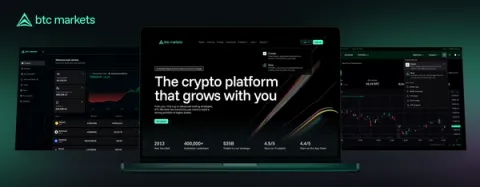
BTC Markets’ new platform is live and out of beta